Steel Roofing vs Metal Roofing: What’s the Difference?
If you’ve been searching for metal roofing in Nova Scotia, you’ve probably seen “steel roofing” and “metal roofing” used like they mean the same thing. Sometimes they do. Often they don’t. And if you’re making a roofing decision, the distinction matters.
Here’s the breakdown.
Metal Roofing is the Category. Steel is One Option Within It.
Metal roofing is the umbrella term. It covers any roofing system made from a metal material, including:
- Steel (the most common in Atlantic Canada)
- Aluminum
- Zinc
- Copper
- Galvalume (a steel alloy coated with aluminum and zinc)
When someone says “metal roofing,” they could mean any of these. When someone says “steel roofing,” they mean one specific material within that category.
Most residential and commercial metal roofing installed in Nova Scotia is steel, which is why the terms get used interchangeably. But not all steel roofing is the same, and material is only one part of the picture.
The More Important Question: What Type of System?
The bigger difference isn’t steel vs. aluminum, it’s the panel system. There are two main categories:
Exposed fastener panels (corrugated, screw-down)
The panels are screwed directly through the face of the metal. Fasteners are visible. Less expensive to install, but the penetrations are a long-term vulnerability. Screws can back out, washers fail, and every penetration is a potential leak point.
Concealed fastener panels (standing seam)
Fasteners are hidden beneath the panels, nothing penetrates the face of the metal. The panels interlock at raised vertical seams, creating a watertight surface with no exposed hardware.
Standing seam is the premium system. It’s what KLAD manufactures and installs.
What does Standing Seam mean, exactly?
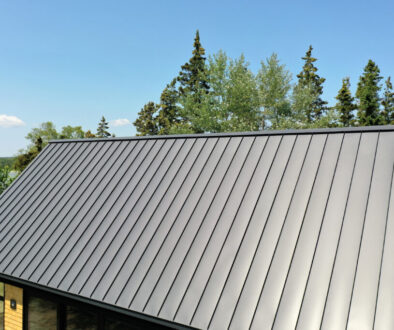
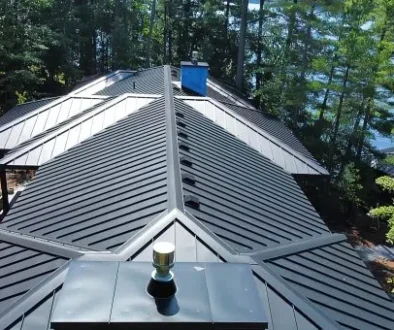
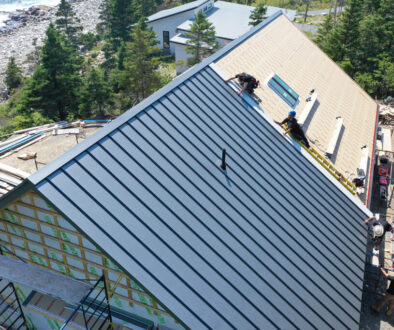
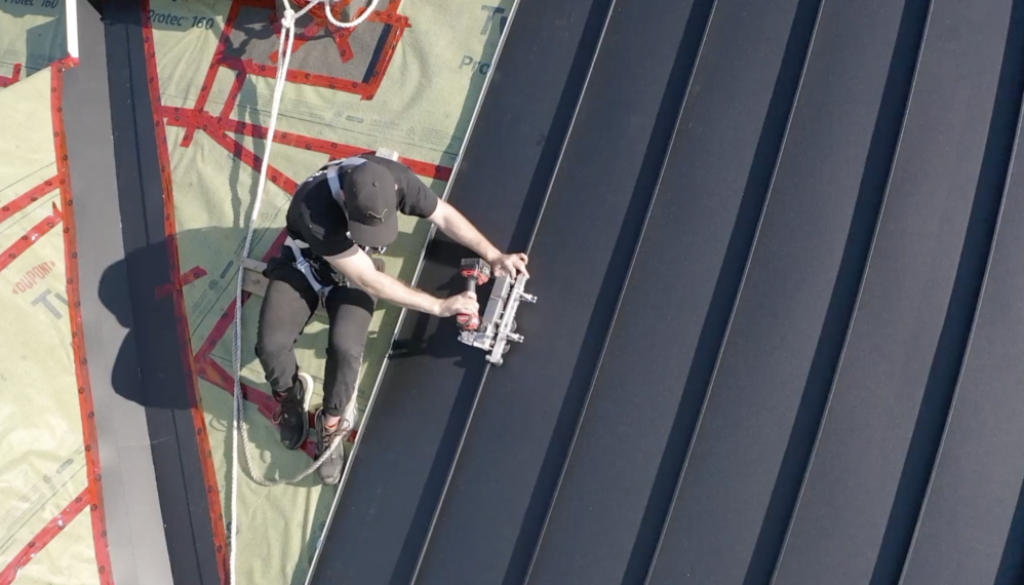
Standing seam metal roofing gets its name from the raised seams that run vertically from ridge to eave. Adjacent panels lock together at those seams, and the fasteners clip beneath them, out of sight and out of the weather.
KLAD manufactures one type of standing seam panel:
Mech-Lock (Mechanically Seamed)
The panel edges are mechanically folded and locked together with a seaming tool. This creates the most weather-tight connection available, with no exposed fasteners of any kind. Mech-Lock is recommended for low-slope roofs, coastal properties, and any application where maximum wind and water resistance is the priority.
Mech lock panels are available in 12 to 20 inch widths, 24 or 26 gauge Galvalume steel, in single or double lock configurations. They carry a 50-year warranty and are rated to 150 MPH wind resistance.
Why Does This Matter in Nova Scotia?
The Maritimes take a beating. Coastal salt air, freeze-thaw cycles, hurricane-track storms, and heavy snow loads are all factors that exposed fastener systems handle poorly over time. Every screw hole is a potential failure point in a climate that tests every weakness.
Standing seam panels have no exposed fasteners. They also use floating clips that allow the metal to expand and contract with temperature changes without stressing the panel or the connection points. That matters in a province where you can see a 50 degree temperature swing between seasons.
KLAD’s panels are manufactured in Liverpool, Queens County, Nova Scotia. That means no tariff exposure, faster lead times, and panels made for the Maritime climate, not shipped from a distribution hub in the US or central Canada.
So When Someone Says “Steel Roofing,” What Do They Mean?
Usually they mean metal roofing generally, but they may not be thinking about the system type at all. The material (steel) is almost always the right call for Nova Scotia. The system type is where the real decision happens.
If you’re comparing quotes and one contractor is pricing exposed fastener panels and another is pricing standing seam, you are not comparing the same product. Standing seam costs more upfront, but it costs significantly less over 50 years.
Ready to See What Standing Seam Looks Like on Your Building?
KLAD uses drone scanning for accurate roof measurement, so you can get a precise quote and render without anyone climbing on your roof.
Interested in ordering panels for your own installation? [Talk to us about contractor supply.] (link to contractor page)