Metal Cladding: Types, Uses, and How It’s Installed
Metal cladding is a layer of metal panels fastened to the outside of a building to protect the walls from weather. It does the same job as vinyl, wood, or fibre cement siding, but the panels are made of steel or another metal. You’ll also hear it called metal siding, steel cladding, or metal wall cladding. This guide covers the main types of metal cladding, where it’s used, how thick it is, how it’s installed, and how to look after it.
What is metal cladding used for?
Metal cladding panels show up on almost every kind of building:
- Homes: full exterior siding, or partial coverage on gables, dormers, and additions.
- Feature walls: a section of metal cladding that contrasts with wood or another siding material.
- Commercial and agricultural buildings: shops, warehouses, barns, and garages where durability and low maintenance matter most.
- Combined roof and wall systems: the same panel on the roof and walls for a continuous look, with matching trims and flashing.
Types of metal cladding
The biggest difference between types of metal cladding is how the panels are fastened to the wall.
Exposed-fastener panels
Corrugated (wavy) and ribbed profiles are the most common exterior metal cladding on the market. The panels overlap at the edges and are screwed through the face into the wall, with a rubber washer under each screw head to seal the hole. They go up quickly and cost less up front. The trade-off is hundreds of screw holes through the panel face. Over time, washers can dry out and screws can loosen as the metal expands and contracts with temperature changes, so they may need checking and replacing.
Concealed-fastener standing seam cladding
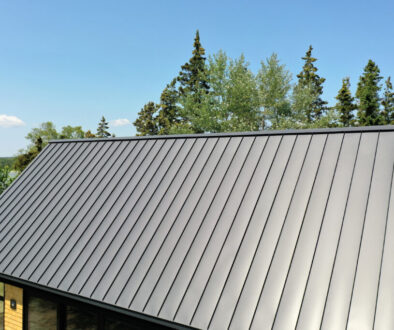
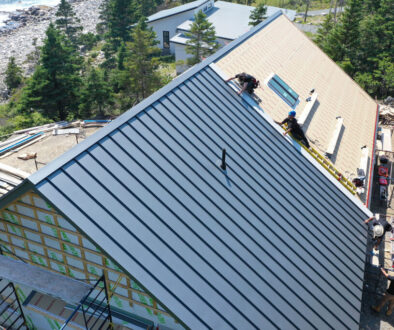
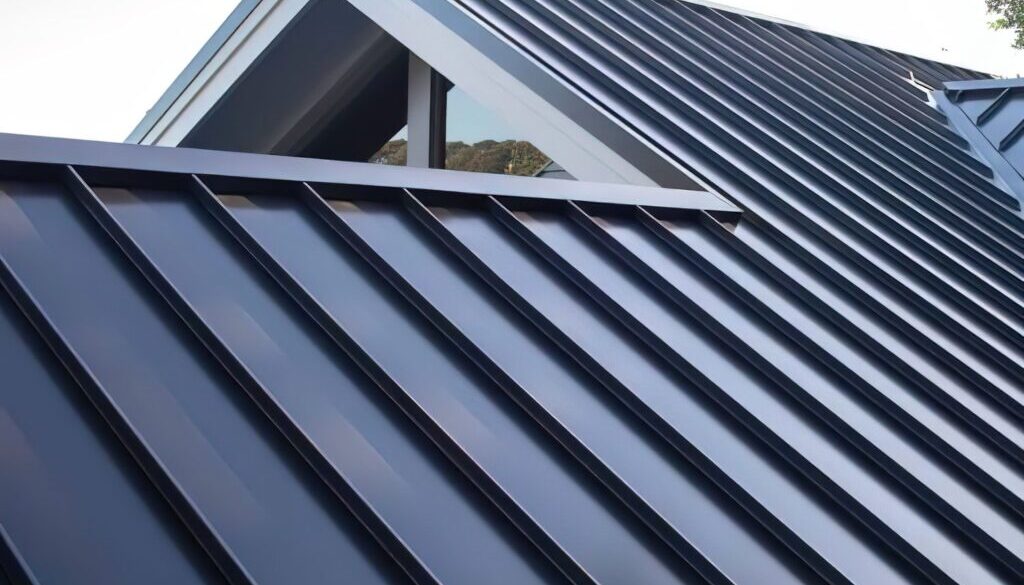
Standing seam cladding works the same way as a standing seam metal roof. Each panel has raised edges, called seams. Clips fasten to the wall and are hidden under the panels, and neighbouring panels are joined by folding the seams together with a seaming tool. There are no exposed screws and no holes through the panel face.
KLAD’s Mech-Lock system is a mechanically seamed standing seam panel, the same one used on KLAD roofs. Seams can be single lock (folded once) or double lock (folded twice for a tighter seal), and an optional bead rib profile adds subtle lines across the panel face. For a deeper look at the system, see what standing seam metal roofing is.
Materials
Most steel cladding is coated to resist rust. Galvanized steel has a zinc coating. Galvalume steel has a coating of aluminum and zinc, which generally holds up longer against corrosion. Aluminum is lighter and won’t rust but dents more easily. Zinc and copper are premium architectural metals that weather to a natural patina over time. KLAD panels are pre-painted Galvalume steel.
Metal cladding vs other siding materials
Compared to other common siding materials, metal cladding:
- doesn’t rot, split, or attract insects the way wood can
- doesn’t become brittle and crack in the cold the way vinyl can
- weighs less than fibre cement
- doesn’t need repainting on a schedule when it has a factory finish
Metal can dent from a hard impact, and the upfront cost is usually higher than vinyl. For many homeowners, the longer lifespan and low maintenance outweigh that.
How thick is metal cladding?
Steel cladding thickness is measured in gauge. The lower the number, the thicker the steel, so 24 gauge is thicker than 26 gauge.
- 26 gauge is about 0.018 inches (approx. 0.45 mm) thick. It’s lighter and lower in cost, and is a common choice for residential walls.
- 24 gauge is about 0.024 inches (approx. 0.61 mm) thick. It’s stiffer and more dent resistant, and helps panels look flatter. It’s often chosen for larger walls, commercial buildings, and exposed coastal sites.
How metal cladding is installed
Metal wall cladding can run vertically, horizontally, or diagonally. Vertical is the most common. A typical standing seam install goes like this:
- The wall is prepared with sheathing and a weather-resistant barrier.
- Starter trims and flashing go in at the base and around windows and doors to direct water away from openings.
- The first panel is set plumb and fastened to the wall with concealed clips.
- Each new panel is set against the one before it, covering the clips.
- The seams are mechanically seamed along their full length.
- Finishing trims cap the top, corners, and edges.
Trims and flashing do a lot of the work in keeping water out, which is why KLAD manufactures its panels, trims, and flashing together in Liverpool, Queens County, for a consistent fit.
Finishes and colours
KLAD metal cladding panels come in three finish options, all with a 40-year finish warranty:
- Classic Colours (SMP): durable with good colour retention, and the right fit for most residential projects.
- Signature Series (PVDF): a premium coating with stronger resistance to fading, chalking, and UV. Often chosen for coastal and commercial buildings.
- TEX Series: six textured finishes.
See all the colour options on the KLAD colours page
Can you paint metal cladding?
Pre-painted metal cladding isn’t designed to be repainted. KLAD panels come with a factory finish, and painting them voids the 40-year finish warranty, so KLAD doesn’t recommend it.
Care and maintenance
Metal cladding needs very little upkeep. To clean it:
- Rinse with plain water for most dirt.
- For general grime, use mild liquid dish soap diluted in water. Apply with a soft cloth, sponge, or soft-bristled brush, then rinse thoroughly.
- Avoid abrasive powders, scouring pads, wire brushes, and harsh solvents, which can damage the finish.
How much does metal cladding cost?
Cost depends on gauge, colour, project size, and whether you buy panels only or full supply and install. For current KLAD pricing, see metal cladding in Nova Scotia.
Get a quote
KLAD manufactures standing seam metal cladding, trims, and flashing in Liverpool, Queens County. Panels are 100% Canadian made, delivered across the Maritimes, and installed within an hour of Liverpool. Every system carries a 50-year system warranty and a 40-year finish warranty. Use the quote calculator to get an estimate, or learn more about KLAD’s standing seam metal panels.