What is Oil Canning on a Metal Roof?
If you’ve been shopping around for a metal roof, you may have heard the term “oil canning” and wondered if it’s something to worry about. It’s the single most common question homeowners and contractors ask about metal roofing, and the honest answer is that it’s a normal characteristic of the material, not a sign that something has gone wrong.
What Causes Oil Canning?
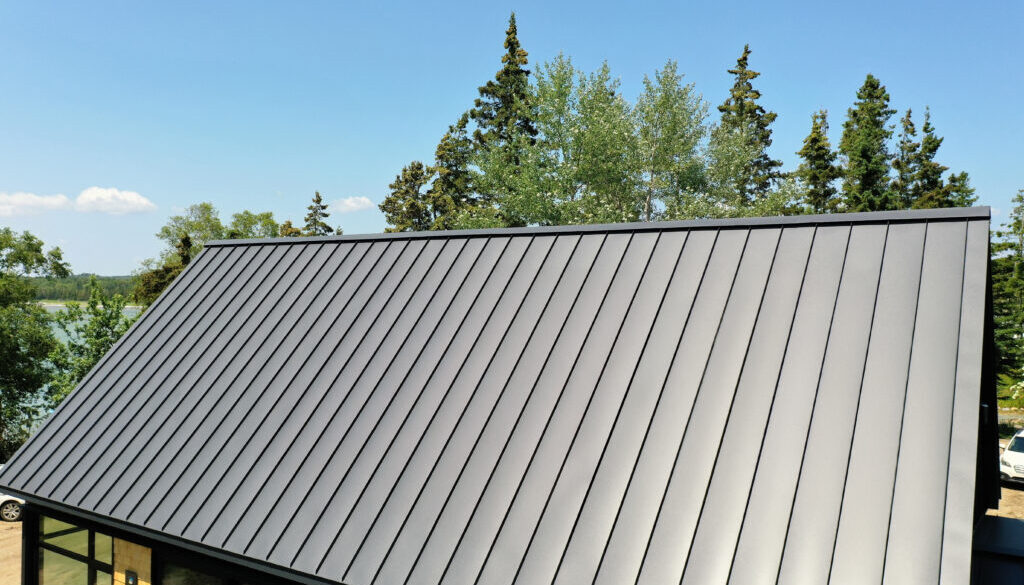
Oil canning is the slight waviness or rippling you sometimes see in the flat areas of a metal panel. It happens because metal expands and contracts with temperature changes. As a panel heats up in the sun and cools back down overnight or with the seasons, that movement can show up as a subtle distortion in the flat pan of the panel, especially when the light hits it at a low angle.
This isn’t unique to any one manufacturer or installer. It’s a property of thin, flat metal, and it shows up to some degree on any standing seam roof.
Is Oil Canning a Defect?
No. It’s not a manufacturing flaw, and it’s not evidence of a poor installation. Because it’s caused by thermal expansion and contraction, oil canning can’t be fully eliminated on a flat metal panel. Any straight answer to this question should be a matter-of-fact one: it’s an inherent characteristic of the material, not a defect in your roof.
Does Oil Canning Go Away Over Time?
A newly installed metal roof often looks its waviest in the first few months. That’s because the panels haven’t yet gone through a full seasonal cycle, roughly a year of heating and cooling, that lets them settle into their final position. Once a roof has been through all four seasons, the oil canning you notice right after installation is often far less visible.
How to Minimize Oil Canning
While it can’t be eliminated completely, there are two main ways to reduce how noticeable oil canning is:
Bead Ribs
Adding stiffening ribs to the flat pan of the panel breaks up the flat surface and disrupts the reflection that makes oil canning stand out. This does change the look of the panel slightly, so it’s worth deciding up front whether you prefer the cleaner look of a flat pan or the added stiffness of a ribbed one.
Heavier Gauge Metal
A thicker panel is more rigid and less prone to oil canning than a thinner one. This comes with a tradeoff in cost and labour, which is a separate decision worth its own conversation with your installer. Explore our different metal gauges here.
Should Oil Canning Change Your Decision?
Short answer, no. Oil canning is cosmetic, not structural. It doesn’t affect how well your roof sheds water, holds up to wind, or lasts over time. Whether you choose a flat panel or one with bead ribs, a properly installed standing seam roof is built to last a lifetime. The real risk to a metal roof isn’t oil canning, it’s a severe weather event. That’s what’s worth planning for, not a bit of waviness on a sunny afternoon.
Get a Second Opinion
If you’re weighing a metal roof for your home and want to talk through what to expect, contact us to get the answers.